

If your Alaska cruise plans are mostly town walking, museums, scenic drives, and shipboard time, you may not need to buy waterproof hiking boots at all. If you are hiking wet trails, spending hours outside in rain, or taking a small-boat or muddy excursion, waterproof footwear becomes much more useful.
Quick answer
Comfortable waterproof walking or trail shoes are enough for many Alaska cruisers. Hiking boots make more sense when your actual plans include hiking, mud, rough terrain, or an excursion operator that specifically recommends them.
The right answer depends on what you are actually doing ashore—not simply on the words “Alaska cruise.” This guide is a focused companion to What to Pack for an Alaska Cruise—and Why.
Waterproof shoes are not the same thing as hiking boots
These decisions often get bundled together, but they solve different problems.
- Water-resistant walking shoes can handle light moisture and short periods in damp conditions, but they are not designed to stay dry through sustained rain or puddles.
- Waterproof walking or trail shoes are useful when you want rain protection without the bulk of a boot.
- Waterproof hiking boots add more coverage and, depending on the design, support for rougher or muddier terrain.
For many cruise travelers, the useful middle ground is a comfortable waterproof or genuinely weather-capable walking shoe—not a heavy boot.
When ordinary walking shoes may be enough
You may be perfectly well served by comfortable walking shoes if your port days look more like this:
- walking around downtown Juneau, Ketchikan, Skagway, or another port;
- museum or cultural visits;
- bus, train, or van-based sightseeing;
- short walks between shops, restaurants, and attractions;
- shipboard days with only brief outdoor exposure.
Check the forecast close to departure and think realistically about how long you will stay outdoors if it rains. If you already own comfortable shoes that can handle your plans, “Alaska” by itself is not a reason to replace them.
When waterproof footwear earns its suitcase space
Waterproof footwear becomes much more useful when wet conditions are part of the activity rather than an inconvenience you can duck out of.
Long outdoor excursions
If you will spend several hours outside, wet shoes can turn a good excursion into a very long day. Waterproof walking or trail shoes can make sense even if you are not doing a demanding hike.
Trails, mud, and uneven ground
Glacier Bay National Park describes long periods of rainy, cool weather as normal in Southeast Alaska and says sturdy waterproof footgear is desirable for park visitors. Its basic visitor guidance also lists waterproof boots among suggested clothing. That is useful context for wet, trail-heavy outings—but it does not mean every cruise passenger needs hiking boots for paved port days.
Official context: Glacier Bay National Park basic information and safety guidance.
Small-boat, wildlife, or rain-heavy days
Even without hiking, you may spend substantial time on docks, exposed walkways, or outside in steady rain. A low waterproof walking shoe can be a better compromise here than packing a full hiking boot you will barely use.
If Juneau is on your itinerary, your footwear decision should follow the excursion. A whale-watching boat, Mendenhall visit, and longer trail day have different needs. See Juneau Shore Excursions: Whale Watching, Mendenhall, or Both? before you buy gear for a plan you have not actually chosen yet.
Do you need hiking boots for an Alaska cruise?
Not automatically.
Hiking boots make more sense when your itinerary actually includes hiking, muddy trails, rough terrain, or an excursion operator that recommends them. They are often unnecessary for travelers whose days ashore are mostly paved walking and vehicle-based sightseeing.
Before buying boots, read each excursion description and the operator’s “what to bring” information. Some activities provide specialized footwear or other protective gear, and there is little benefit in carrying a bulky item across Alaska if the tour already supplies what you need.
What matters more than the word “waterproof”
Comfort
Wear the shoes before the trip. Walk in them with the socks you plan to pack. A cruise is a poor time to discover that a new pair rubs your heel after twenty minutes.
Traction
Wet pavement, docks, boardwalks, and trails can all be slick. Look at the outsole and the intended use of the shoe rather than assuming every waterproof shoe has useful grip.
Fit with your actual itinerary
A shoe that is ideal for a muddy trail may be needlessly heavy for a day of shopping and sightseeing. One versatile pair that handles most of your plans can be more useful than packing a different shoe for every scenario.
Drying time
If non-waterproof shoes get thoroughly soaked, they may still be damp the next morning. That matters more on a cruise where the same pair may need to work several days in a row.
A simple decision guide
| Your plans | What may be enough |
|---|---|
| Mostly ship + paved port walking | Comfortable walking shoes; weather protection depending on forecast |
| Long outdoor sightseeing in likely rain | Waterproof walking or trail shoes |
| Easy nature trails or potentially muddy paths | Waterproof trail shoe or light hiking shoe |
| Rougher hiking / operator recommends boots | Waterproof hiking boot appropriate to the terrain |
| Specialized wet activity | Check what the operator provides before buying anything |
What you probably do not need
- A heavy hiking boot when your itinerary contains no hiking.
- Several pairs of nearly identical outdoor shoes.
- A brand-new pair the week before departure.
- Specialized wet-weather footwear before checking what your excursion supplies.
- A shoe simply because an “Alaska cruise must-haves” list linked to it.
The goal is not to own the most Alaska-looking footwear. It is to stay comfortable and appropriately prepared for the days you actually planned.
If you do need to buy shoes, use criteria before brands
A useful recommendation should start with the job the shoe has to do. Rather than buying from a long “must-have” list, compare a few features that match your itinerary:
- For town walking: prioritize comfort, reasonable grip, and weather protection appropriate to your forecast.
- For wet outdoor days: prioritize genuine waterproof construction, grip, and all-day comfort.
- For trails: add terrain-appropriate traction and support.
- For limited suitcase space: favor the pair that can serve the greatest number of your actual activities.
Specific products are only worth naming when their current specifications genuinely fit one of those needs. Bearflower & Birch does not treat every item on a packing list as a shopping opportunity.
Use your excursion list to make the final call
Write each port and excursion on one line. Beside it, note the expected surface and exposure: paved town, boat, trail, mud, long outdoor time, or mostly indoors. If the same weather-capable walking shoe handles almost every line, you probably do not need to add a bulky boot “just in case.”
Turn the decision into a packing plan
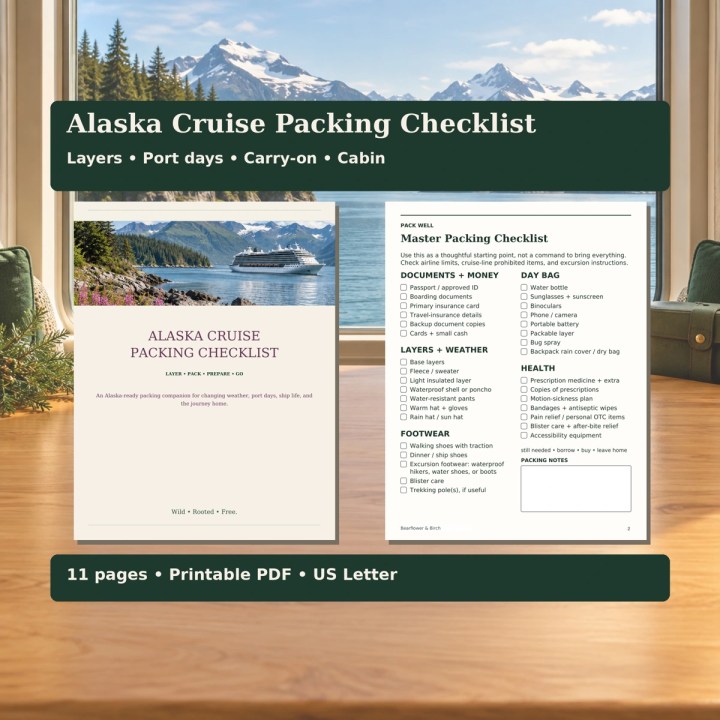
The Bearflower & Birch Alaska Cruise Packing Checklist keeps footwear, layers, port-day gear, carry-on items, documents, and last-minute checks together once you have decided what your trip actually needs.
Related Field Notes
- What to Pack for an Alaska Cruise—and Why
- What to Pack for an Alaska Cruise in September
- Juneau Shore Excursions: Whale Watching, Mendenhall, or Both?
Editorial note: Weather, trail conditions, excursion requirements, and supplied gear can change. Check your current itinerary and operator guidance before buying footwear specifically for a trip. Bearflower & Birch does not claim firsthand testing of products unless that experience is explicitly identified.

